Price and booking
Base tour
From €190 per person
Optional restaurant lunch: +€28 per person. Pickup: Inđija Railway Station included; Sava Centar in Belgrade or central Novi Sad +€10 per person. Choose one pickup location and the corresponding add-on when booking.
Book the tour on GetYourGuideStarting prices depend on party size and option. Check the final total before booking. The lunch add-on covers one selected meal.
What the visit looks like
Day one
Visit Ravanica and Lešje, then arrive at Studenica and stay overnight in the monastery guesthouse.
Day two
Breakfast, a hike to the Hermitage of St. Sava and a visit to Žiča. Before booking, we discuss the demands of the hike and your abilities.
Ravanica
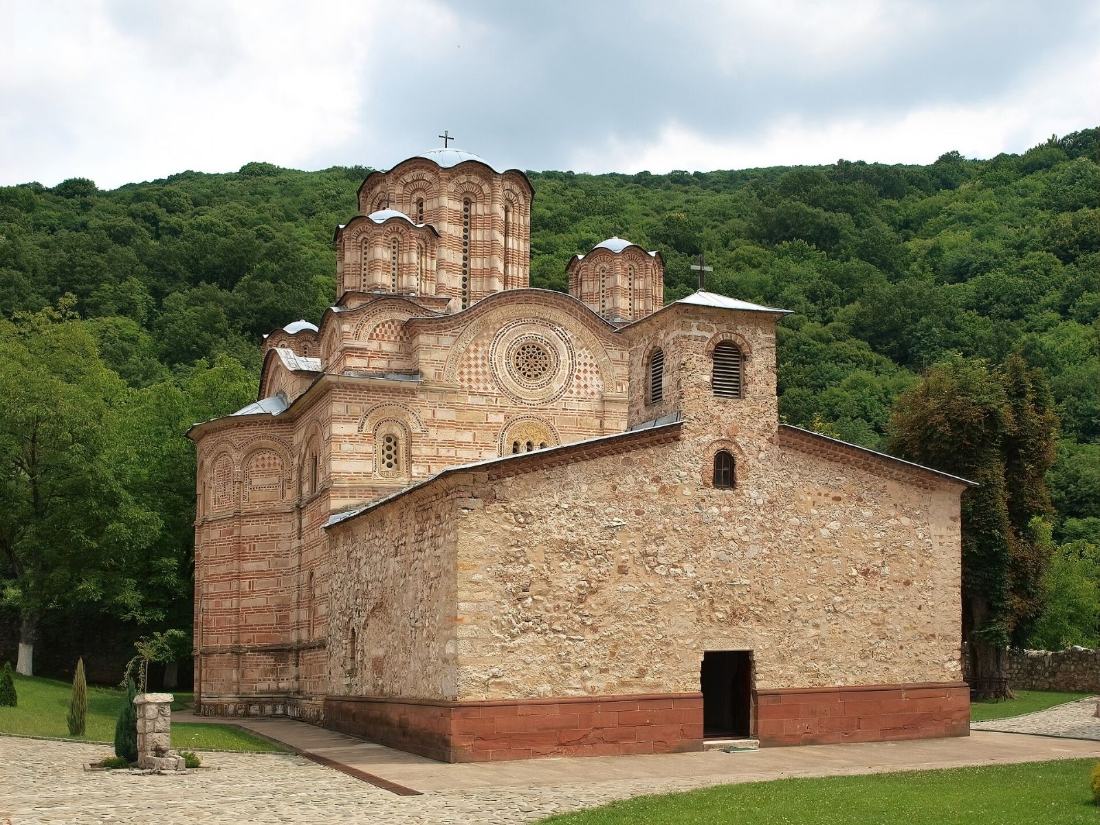
Petar Milošević · CC BY-SA 3.0 Ravanica stands near Senje, close to Ćuprija. Founded by Prince Lazar in the second half of the 14th century, its church is dedicated to the Ascension of Christ. It is central to understanding Serbia before the Battle of Kosovo and the later veneration of St Prince Lazar.
More about this monastery →Art, sacred heritage & visiting
Ravanica's architecture played an important role in the emergence of the Morava school. The multiple domes, carved stone decoration and surviving fortifications show the relationship between religious and defensive functions. The history of Lazar's relics connects Ravanica with Srem Ravanica in Vrdnik.
Look at the exterior decoration, the relationship between church and fortifications, and the surviving painting. A visit introduces Lazar's foundation while distinguishing historical evidence from later epic tradition. On our itineraries, Ravanica forms part of the wider story of the Morava monasteries.
Lešje
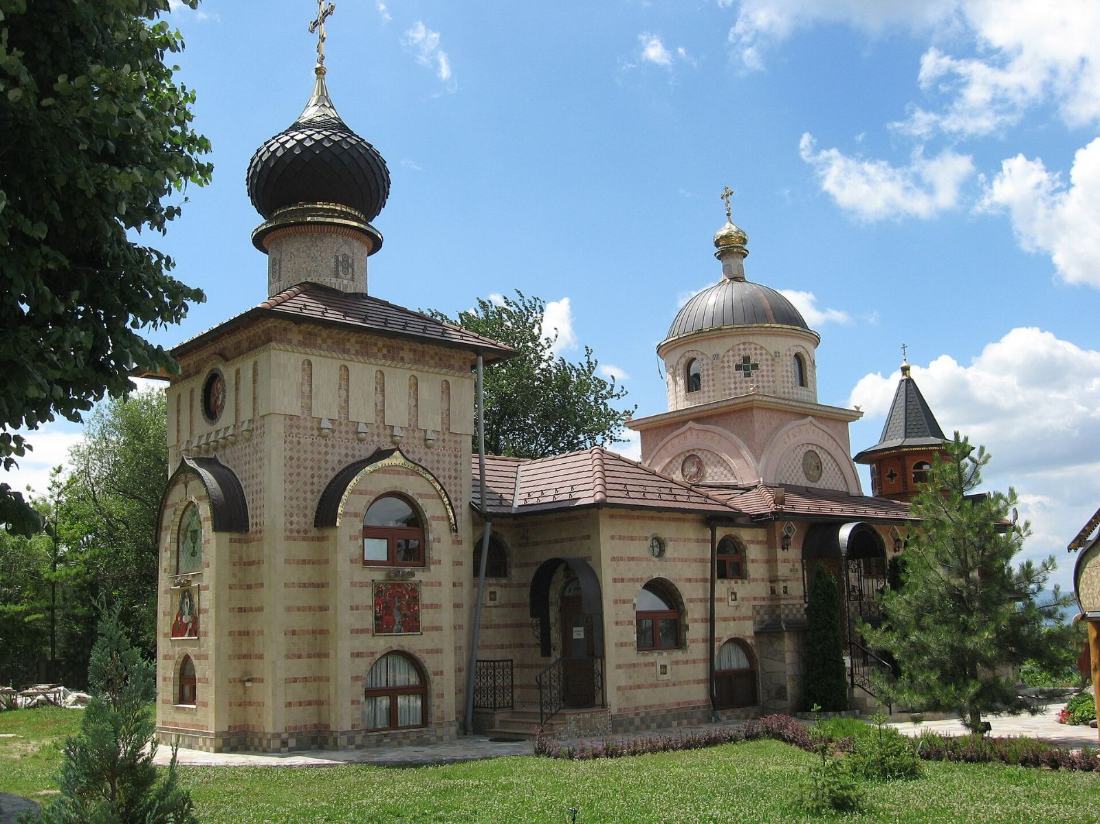
Sonjabgd · CC BY-SA 3.0 Lešje, on the slopes of Mount Baba near Paraćin, preserves the story of a monastery in the medieval Petrus region. Written sources connect its church with nobleman Vukoslav and his family in the 14th century. Its history includes a link with Hilandar, to which the church was donated.
More about this monastery →Art, sacred heritage & visiting
The present complex, dedicated to the Protection of the Mother of God, also reflects recent rebuilding. Medieval remains should be distinguished from the newer buildings that attract visitors today. This helps explain the continuity of the sacred place without suggesting that everything visible belongs to one period.
At Lešje we discuss monastic dependencies, the donation of churches and Serbia's spiritual connections with Mount Athos. Observe the present complex while placing its older layers in the history of the Petrus region. Lešje is one of the stops listed in our two-day itinerary.
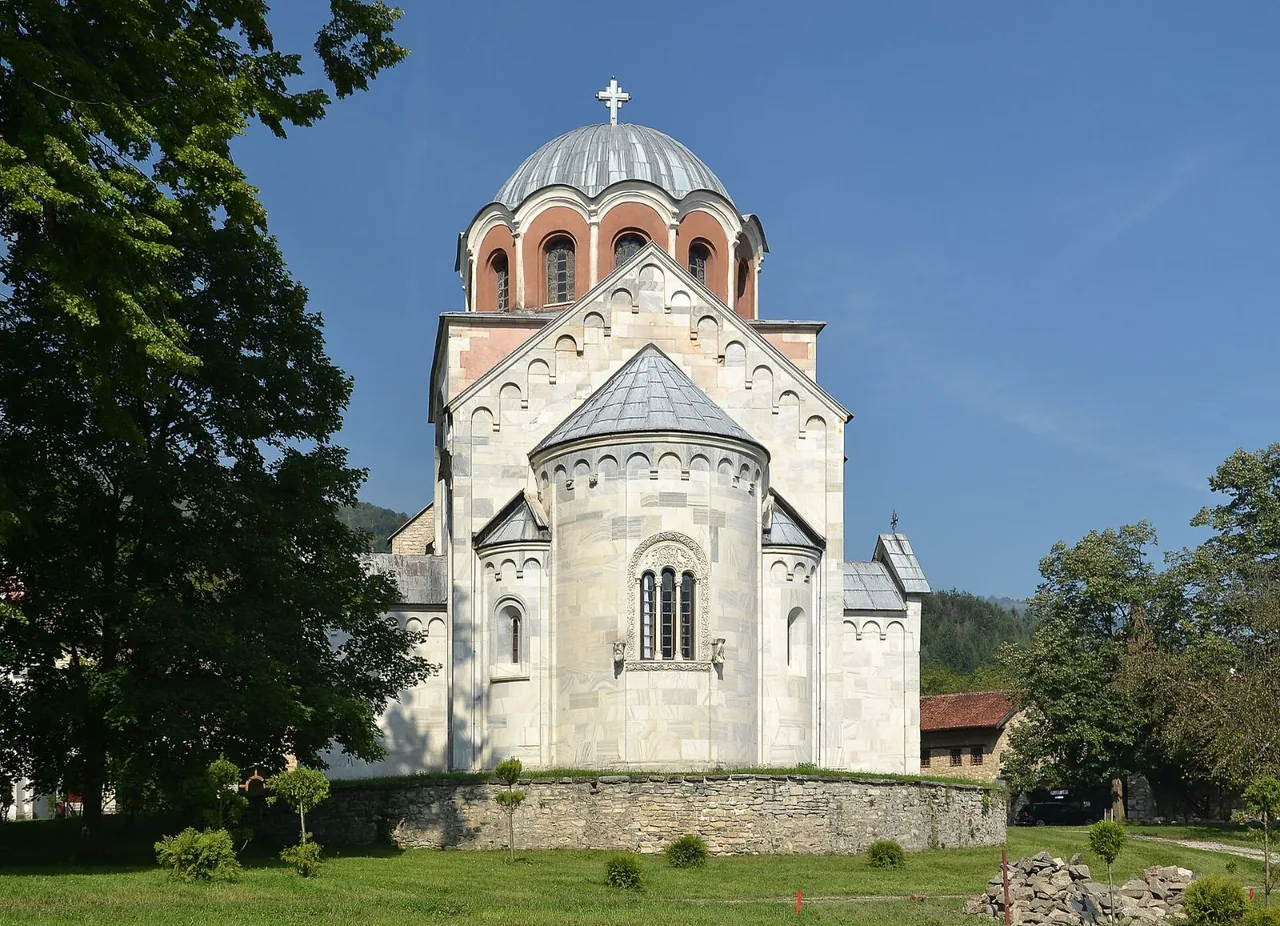
Studenica
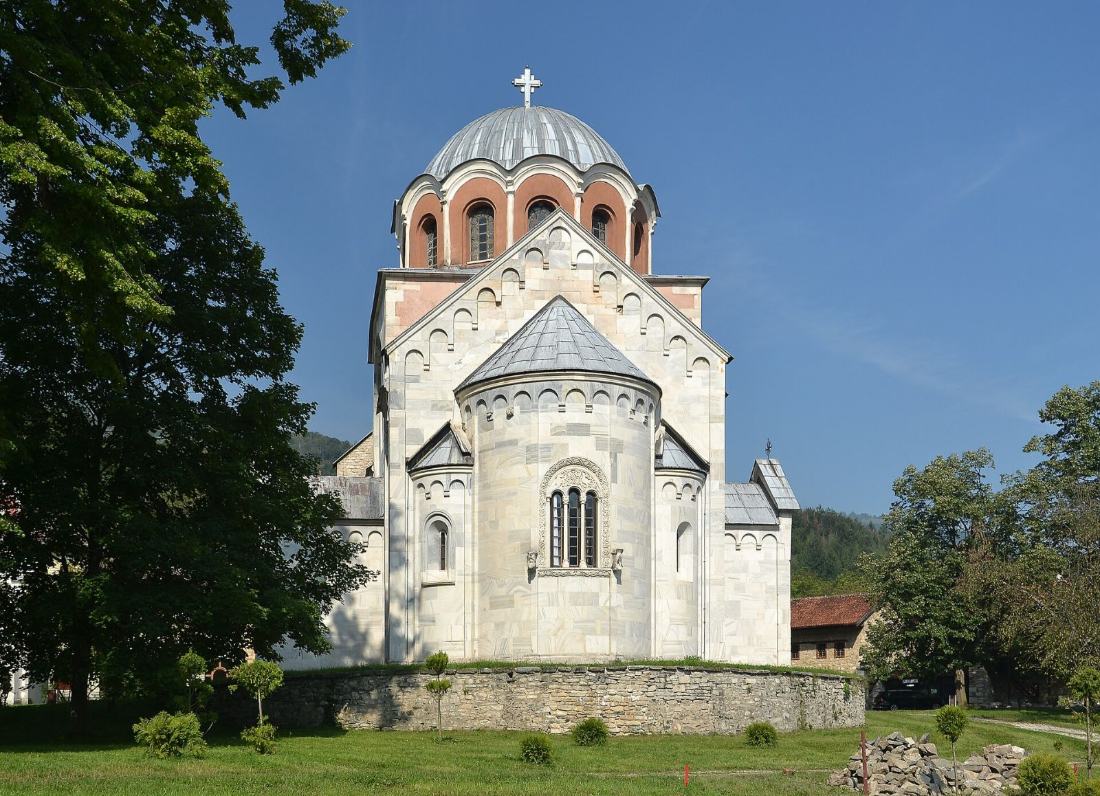
Pudelek · CC BY-SA 3.0 Studenica was founded by Stefan Nemanja in the late 12th century and is central to the history of the Nemanjić dynasty. The Church of the Mother of God, with its white marble exterior, is a major example of the Raška architectural tradition. St Sava helped organise monastic life here as archimandrite.
More about this monastery →Art, sacred heritage & visiting
The complex brings together architecture and frescoes from different medieval periods. The Church of the Mother of God and the King's Church introduce the development of Byzantine painting in Serbia. Studenica has been a UNESCO World Heritage Site since 1986 while remaining an active monastery.
Allow time for Studenica: first study the marble and architectural details, then visit the churches that are accessible. Our two-day itinerary connects its story with Žiča and the other monasteries listed in the programme. A visit explores the relationship between royal patronage, monasticism and art while leaving room for quiet reflection.
Žiča
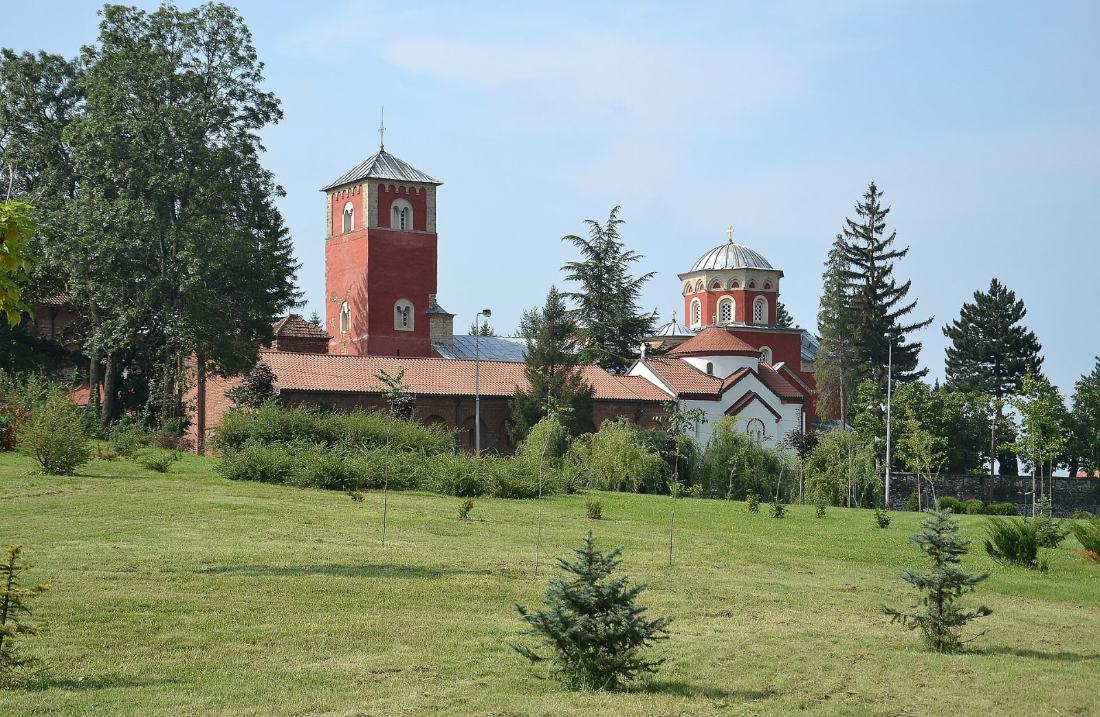
Pudelek · CC BY-SA 3.0 Žiča, near Kraljevo, was founded in the early 13th century through the work of Stefan the First-Crowned and St Sava. Following the establishment of an independent Serbian Church in 1219, it became the first seat of the Serbian archbishopric. Its history is closely tied to the organisation of church and state under the Nemanjić dynasty.
More about this monastery →Art, sacred heritage & visiting
The Church of the Ascension is recognisable by its red exterior. Žiča is associated with the coronation of Serbian rulers, while the tradition of its 'seven doors' belongs to its historical memory. Surviving and restored wall paintings reflect a long history of destruction and renewal.
Begin by considering Žiča's role as an archiepiscopal seat, then look at the church itself. The red façade attracts attention, but the story of St Sava explains the significance of the place. Our two-day tour pairs Žiča with Studenica to help visitors understand the beginnings of the independent Serbian Church.
What is included
- Local guide Božidar during the tour
- Transportation by private vehicle throughout the tour
- Visits to the monasteries listed in the programme
- Stories about history, Orthodox faith and monastic life
- Overnight at Studenica Monastery guesthouse and breakfast
Lunch is not included in the base price; add a restaurant meal for €28 per person. Personal expenses are not included.
Meeting point and pickup
Choose one agreed meeting point: Inđija Railway Station, Sava Centar in Belgrade or central Novi Sad. We confirm the exact location and time before the tour. Inđija pickup is included; Belgrade or Novi Sad pickup costs an additional €10 per person.
Before booking
How do I book?
Open the relevant GetYourGuide option and check availability. For date, pickup or lunch arrangements, send Božidar a WhatsApp message with the tour name. Your booking is confirmed through your chosen booking method.
What should I wear and bring?
Wear clothing covering shoulders and knees, comfortable footwear and bring water. Respect the monastery's quiet and ask before taking photographs. For the two-day tour, discuss preparation for hiking and the overnight stay with your guide.
How much walking is involved?
The two-day programme also includes a walk to St Sava’s hermitage near Studenica, in addition to monastery visits. Before booking, discuss trail difficulty and preparation with Božidar according to your fitness. Bring suitable footwear and water.
Is the tour suitable for children and older guests?
If travelling with children or older guests, share their ages and needs when arranging the visit. Božidar can discuss pace, breaks and monastery access with you. Some tours involve longer drives or walks, so check suitability before booking.
How can I add lunch?
Restaurant lunch is available by prior arrangement for an additional €28 per person for one meal. Select the Restaurant lunch add-on on GetYourGuide for each guest who wants lunch and let your guide know about dietary requirements.
Where do we meet and what does pickup cost?
Pickup at Inđija Railway Station is included. Pickup near Sava Centar in Belgrade or in central Novi Sad is an additional €10 per person. Choose one pickup location and the corresponding add-on; the exact location and time are confirmed before the tour.