History and foundation
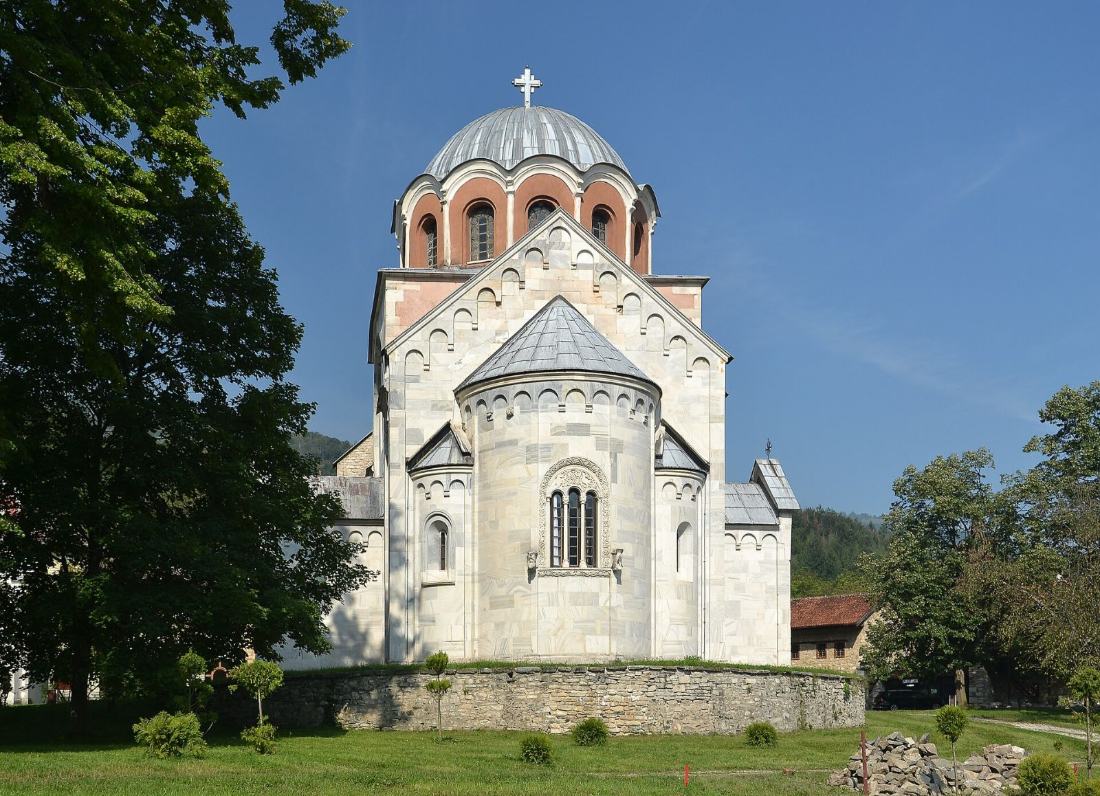
Studenica was founded by Stefan Nemanja in the late 12th century and is central to the history of the Nemanjić dynasty. The Church of the Mother of God, with its white marble exterior, is a major example of the Raška architectural tradition. St Sava helped organise monastic life here as archimandrite.
Art and sacred heritage
The complex brings together architecture and frescoes from different medieval periods. The Church of the Mother of God and the King's Church introduce the development of Byzantine painting in Serbia. Studenica has been a UNESCO World Heritage Site since 1986 while remaining an active monastery.
What to notice on a visit
Allow time for Studenica: first study the marble and architectural details, then visit the churches that are accessible. Our two-day itinerary connects its story with Žiča and the other monasteries listed in the programme. A visit explores the relationship between royal patronage, monasticism and art while leaving room for quiet reflection.
Visiting respectfully
A monastery is a place of prayer and daily monastic life. Wear modest clothing covering shoulders and knees, speak quietly and follow the hosts' instructions. Ask permission before photographing interiors or people. Access to individual areas and the course of the visit depend on services and the monastery's rules on the day. Always ask your guide Božidar what is permitted and where; he will explain the monastery's rules.
Sources and further reading
This visitor introduction distinguishes traditional accounts from reliably documented history.