History and foundation
Žiča, near Kraljevo, was founded in the early 13th century through the work of Stefan the First-Crowned and St Sava. Following the establishment of an independent Serbian Church in 1219, it became the first seat of the Serbian archbishopric. Its history is closely tied to the organisation of church and state under the Nemanjić dynasty.
Art and sacred heritage
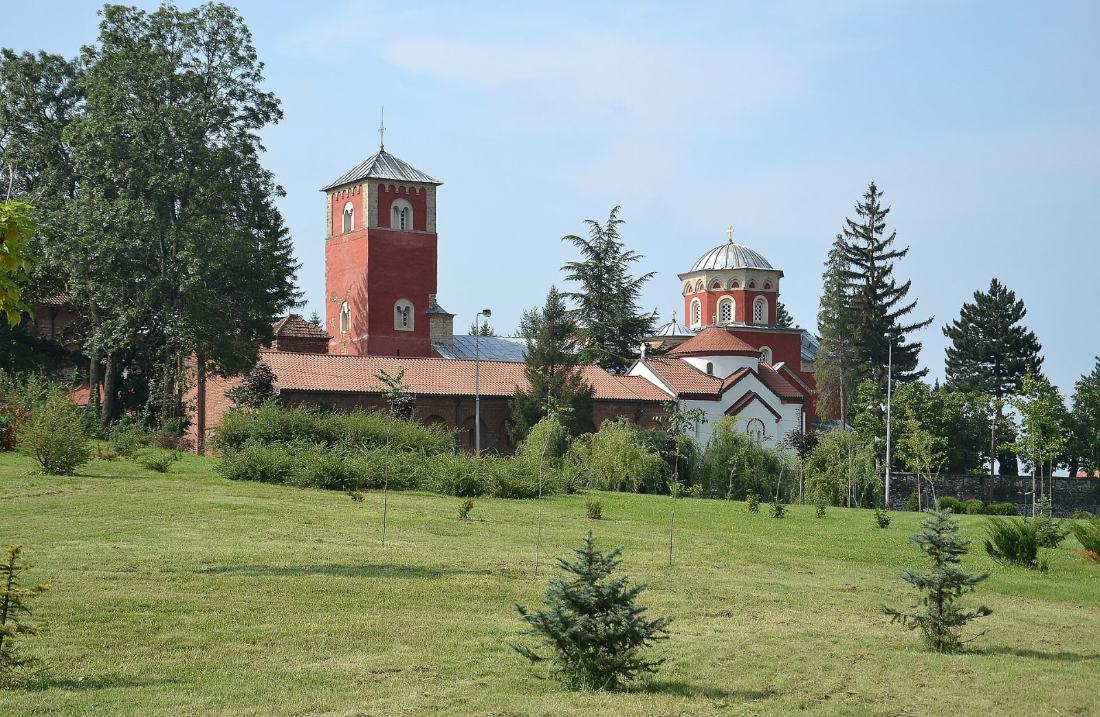
The Church of the Ascension is recognisable by its red exterior. Žiča is associated with the coronation of Serbian rulers, while the tradition of its 'seven doors' belongs to its historical memory. Surviving and restored wall paintings reflect a long history of destruction and renewal.
What to notice on a visit
Begin by considering Žiča's role as an archiepiscopal seat, then look at the church itself. The red façade attracts attention, but the story of St Sava explains the significance of the place. Our two-day tour pairs Žiča with Studenica to help visitors understand the beginnings of the independent Serbian Church.
Visiting respectfully
A monastery is a place of prayer and daily monastic life. Wear modest clothing covering shoulders and knees, speak quietly and follow the hosts' instructions. Ask permission before photographing interiors or people. Access to individual areas and the course of the visit depend on services and the monastery's rules on the day. Always ask your guide Božidar what is permitted and where; he will explain the monastery's rules.
Sources and further reading
This visitor introduction distinguishes traditional accounts from reliably documented history.