History and foundation
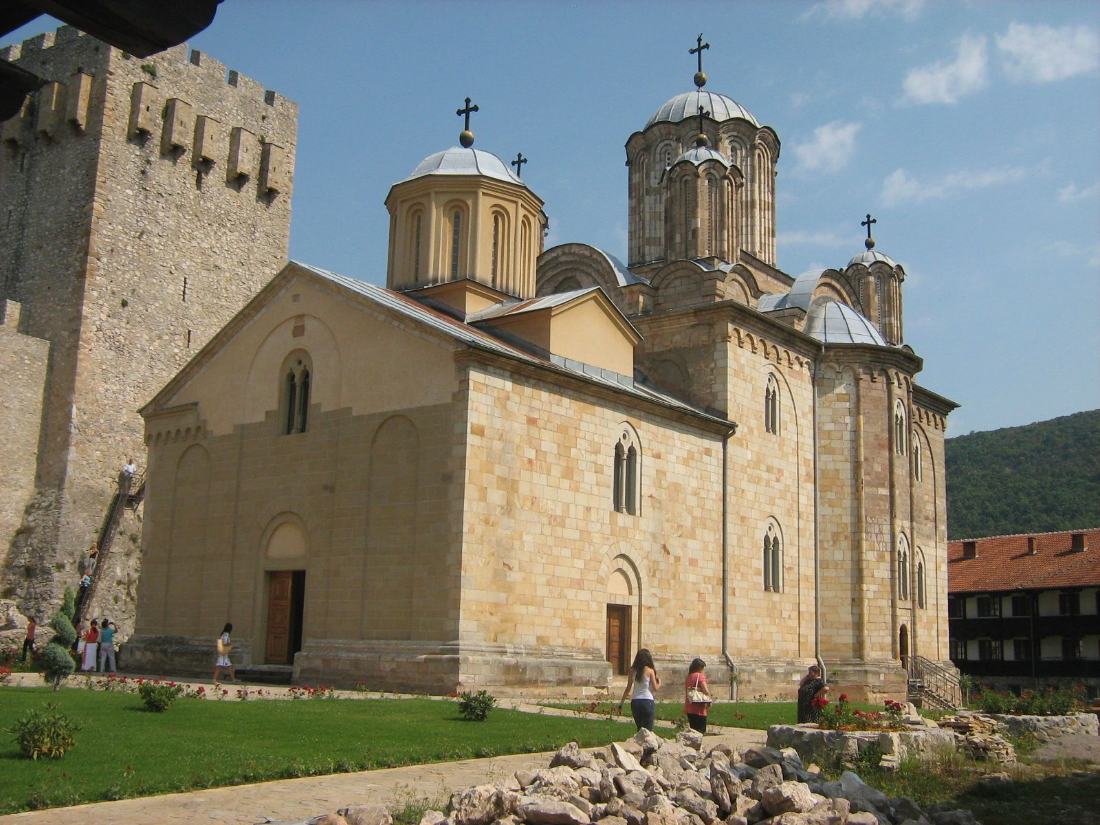
Manasija, also known as Resava, was founded by Despot Stefan Lazarević near Despotovac. Built in the early 15th century, it was completed in 1418. The Church of the Holy Trinity belongs to the Morava architectural tradition and stands within substantial fortifications.
Art and sacred heritage
The monastery became an important centre for copying and translating books, associated with the Resava School. Surviving frescoes, including depictions of holy warriors, reveal the achievements of medieval painting. Walls and towers recall a period when protecting a monastic community required considerable defensive structures.
What to notice on a visit
First take in the fortifications, then give time to the church and its frescoes. This makes it easier to connect the despot's story with books and art. Our day trip and two-day route introduce Manasija alongside the other monasteries listed in their programmes, allowing space for questions.
Visiting respectfully
A monastery is a place of prayer and daily monastic life. Wear modest clothing covering shoulders and knees, speak quietly and follow the hosts' instructions. Ask permission before photographing interiors or people. Access to individual areas and the course of the visit depend on services and the monastery's rules on the day. Always ask your guide Božidar what is permitted and where; he will explain the monastery's rules.
Sources and further reading
This visitor introduction distinguishes traditional accounts from reliably documented history.